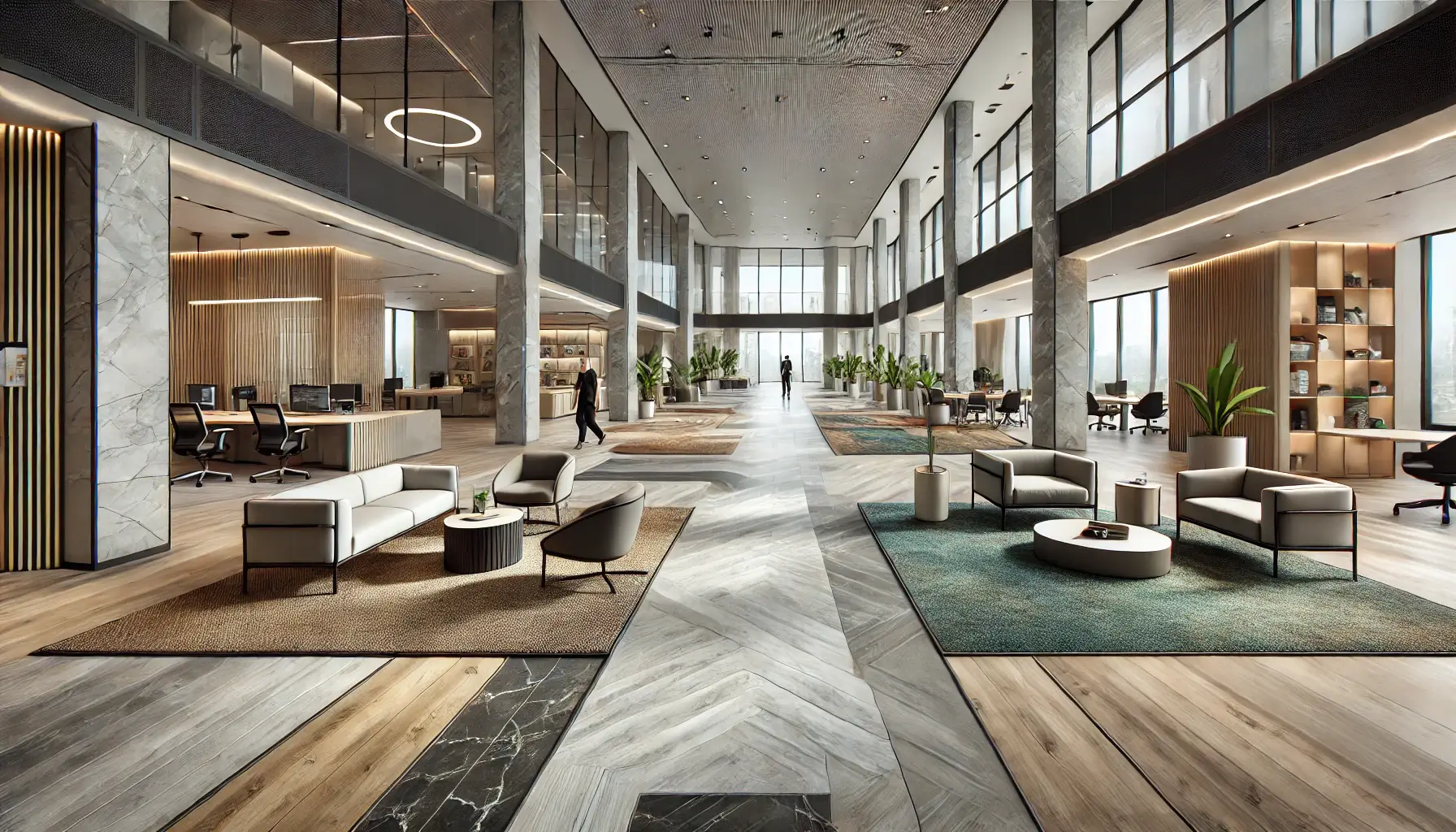
When it comes to designing a commercial space, one of the most important decisions you’ll make is selecting the right flooring. The floors in any office, retail space, or hospitality environment need to balance style, durability, and ease of maintenance. A well-chosen floor not only elevates the overall aesthetics of the space but also ensures it can withstand the heavy traffic and wear common in commercial environments.
Here’s a guide to help you choose the right flooring for your commercial space, keeping aesthetics, durability, and maintenance needs in mind.
1. Consider Aesthetics
The flooring you choose sets the tone for the entire space. It plays a key role in shaping the atmosphere and first impression for anyone entering the space. Consider the following aspects when evaluating the aesthetic impact of flooring:
- Office Spaces: For offices, the goal is often to create a professional, modern, and welcoming environment. Neutral-colored carpets, luxury vinyl tiles (LVT), or polished concrete are popular choices for creating sleek and elegant interiors.
- Retail Spaces: In retail, flooring can guide the flow of customers and enhance product displays. Hardwood or wood-look tiles, polished concrete, and vinyl can create a warm and inviting space, encouraging customers to stay longer.
- Hospitality Environments: For hotels, restaurants, or cafes, the flooring should reflect the brand and vibe. For a cozy, relaxed setting, consider hardwood, LVT, or terrazzo. For a more contemporary, high-end space, large-format tiles or natural stone like marble can make a bold statement.
2. Durability is Key
In commercial spaces, flooring needs to endure heavy foot traffic, frequent cleaning, and potential wear from furniture and equipment. Selecting durable flooring ensures longevity and reduces the need for frequent repairs or replacement.
- Carpet Tiles: Carpet tiles are a popular choice for office spaces because they offer durability and ease of replacement. If one tile gets damaged, you can replace it without needing to replace the entire floor.
- Luxury Vinyl Tile (LVT): LVT is both stylish and incredibly durable, offering resistance to scuffs, scratches, and stains. It is water-resistant, making it an excellent choice for spaces like retail stores or healthcare facilities.
- Polished Concrete: Known for its industrial look, polished concrete is one of the most durable flooring options. It can handle heavy loads and foot traffic without showing signs of wear.
- Ceramic or Porcelain Tiles: For spaces that experience heavy traffic, like restaurants or hospitals, ceramic or porcelain tiles are excellent choices. They resist stains, scratches, and moisture, making them a long-lasting option.
3. Maintenance Requirements
Maintenance is a critical factor, especially in commercial spaces where downtime for repairs or cleaning can be costly. Opting for low-maintenance flooring can save time and money in the long run.
- Hardwood and Engineered Wood: Hardwood floors offer timeless beauty, but they do require regular maintenance, including refinishing and polishing to keep them looking pristine. Engineered wood can offer a similar look with less maintenance, but it still needs some care.
- Vinyl Flooring: Vinyl is one of the most low-maintenance options available. It’s resistant to spills, stains, and scratches, and cleaning requires just regular sweeping and occasional mopping.
- Carpet Tiles: While carpet tiles are durable, they do require vacuuming and occasional deep cleaning, especially in high-traffic areas. However, individual tiles can be replaced as needed, making them easier to manage than wall-to-wall carpeting.
- Tiles (Ceramic/Porcelain): Both ceramic and porcelain tiles are easy to clean with a regular mop and are resistant to most stains. However, grout lines can sometimes collect dirt, so sealing the grout can reduce long-term maintenance needs.
4. Special Considerations
Each commercial space has unique requirements, and flooring should be chosen with these in mind.
- Slip Resistance: In areas prone to moisture, like bathrooms, kitchens, or entryways, slip-resistant flooring is a must. Textured tiles, anti-slip vinyl, and rubber flooring are great choices for ensuring safety in these spaces.
- Acoustic Performance: In offices, sound control is important. Flooring materials like carpet tiles or acoustic underlays can reduce noise levels, creating a quieter and more focused work environment.
- Sustainability: If environmental impact is a concern, look for eco-friendly options like reclaimed wood, cork, or bamboo, which are sustainable and add a unique touch to your design.
Conclusion
Choosing the right flooring for your commercial space is a balance of aesthetic appeal, durability, and maintenance needs. By considering the specific requirements of your space—whether it’s an office, retail store, or hospitality environment—you can select flooring that not only enhances the visual appeal but also stands the test of time.
Remember, investing in quality flooring now will save you from future headaches, offering a durable and attractive foundation for your business to thrive.