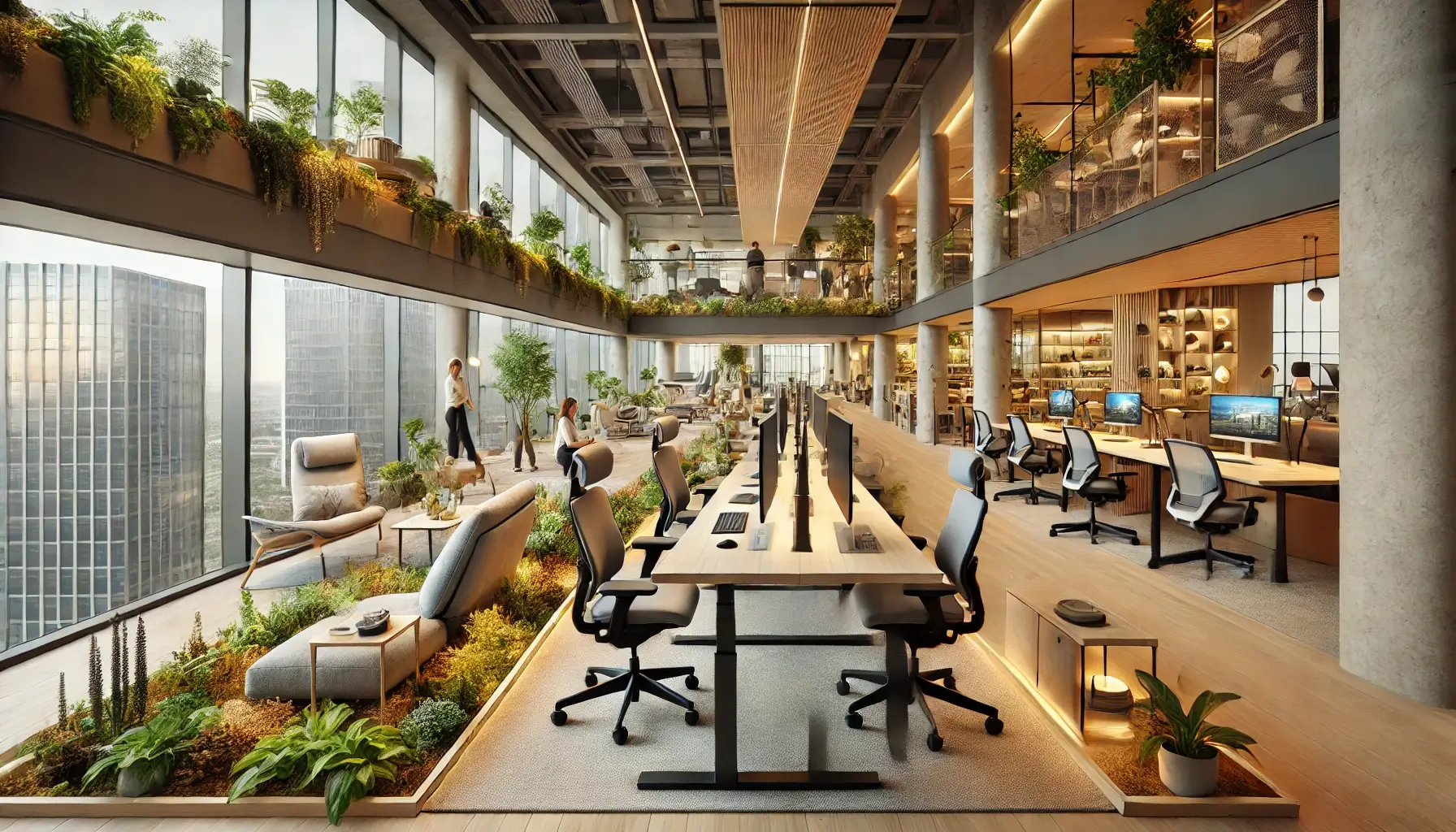
In today’s fast-paced work environment, employee well-being has become a top priority for businesses aiming to enhance productivity, job satisfaction, and retention. One powerful way to foster well-being is through thoughtful interior design that prioritizes both physical and mental health. By creating a workspace that supports wellness, companies can ensure their employees are happy, healthy, and more engaged. Here are some key considerations when designing for employee well-being.
1. Ergonomic Furniture
Ergonomics is essential for reducing physical strain and promoting long-term health. Poor posture, uncomfortable seating, and repetitive strain injuries can all be mitigated by providing adjustable chairs, desks, and monitor stands. Here’s how ergonomics can be incorporated into the design:
- Adjustable Desks: Offering sit-stand desks gives employees the flexibility to switch between sitting and standing, reducing the risk of back pain and promoting better circulation.
- Supportive Chairs: Chairs with lumbar support, adjustable armrests, and seating that encourages proper posture can significantly reduce discomfort during long hours of work.
- Monitor Placement: Ergonomic setups should include monitors at eye level, to prevent neck strain and reduce eye fatigue.
2. Natural Lighting and Biophilic Design
Exposure to natural light can improve mood, energy levels, and even regulate sleep patterns. Incorporating large windows, skylights, or light wells can bring more natural light into the workspace. Additionally, biophilic design, which integrates elements of nature such as plants and natural materials, has been shown to reduce stress and increase overall well-being.
- Plants: Adding indoor plants not only improves air quality but also brings a sense of calm and connection to nature.
- Natural Materials: Use of wood, stone, and other natural elements in furniture and finishes can create a soothing environment that promotes relaxation.
3. Spaces for Relaxation and Recharge
Creating designated spaces for employees to take breaks, relax, or recharge is critical for mental well-being. These spaces can help reduce stress, prevent burnout, and increase focus when employees return to their tasks. Consider the following:
- Quiet Zones: Areas that are free from distractions, such as meditation rooms or nap pods, provide a space for employees to unwind and relax during a busy day.
- Breakout Areas: Lounge areas equipped with comfortable seating, soothing colors, and recreational activities can encourage social interaction and mental relaxation.
- Outdoor Spaces: If possible, outdoor seating areas, patios, or rooftop gardens can give employees a much-needed breath of fresh air, further promoting relaxation.
4. Promoting Movement
Encouraging physical activity throughout the workday can have a huge impact on employee well-being. Design elements that promote movement help to combat the sedentary lifestyle associated with office work.
- Standing Meetings: Incorporate high tables or standing zones for informal meetings to encourage employees to move around during discussions.
- Active Workstations: Consider adding treadmill desks or stationary bikes in shared spaces for those who want to exercise while working.
- Strategic Layout: Create layouts that encourage walking by placing common areas, printers, and break rooms at a short distance from individual workspaces, motivating employees to move throughout the day.
5. Acoustic Comfort
Noise pollution can be a major source of stress and distraction in an office environment. Poor acoustics can lead to reduced productivity and overall discomfort. Implementing sound control measures helps create a more comfortable and focused workspace.
- Acoustic Panels: These can absorb excessive noise and reduce echoes, making the environment calmer and more conducive to concentration.
- Soundproofing: Conference rooms and collaborative areas should be soundproofed to prevent noise from leaking into quieter workspaces.
- Quiet Zones: As mentioned earlier, quiet zones for focused work can help employees escape the buzz of the office when needed.
6. Color and Mood
The colors used in office design can greatly influence mood and energy levels. Cool colors such as blues and greens tend to promote calmness and focus, while warmer colors like yellows and oranges can inspire creativity and energy. Thoughtful use of color can create an environment that feels both welcoming and stimulating.
- Neutral Palettes with Accents: A base of neutral colors with pops of brighter shades can balance relaxation with energy.
- Brand Alignment: Consider incorporating the company’s branding colors in a way that reflects the company’s identity while fostering a positive work atmosphere.
7. Air Quality and Ventilation
Clean air is essential for both physical and cognitive well-being. Poor air quality can lead to headaches, fatigue, and reduced concentration. Incorporating effective HVAC systems and natural ventilation into the design ensures fresh air circulates throughout the space.
- Air Purifiers: Use air purifiers in densely populated areas to keep air clean and free from pollutants.
- Natural Ventilation: Windows that open or strategically placed vents can help maintain good airflow in the workspace.
Conclusion
Designing with employee well-being in mind isn’t just about aesthetics—it’s about creating a supportive environment where employees can thrive physically and mentally. From ergonomic furniture to spaces for relaxation, the right interior design choices can enhance productivity, reduce stress, and ultimately contribute to a happier, healthier workplace. By prioritizing well-being, businesses are not only investing in their employees but also in the success of their company.