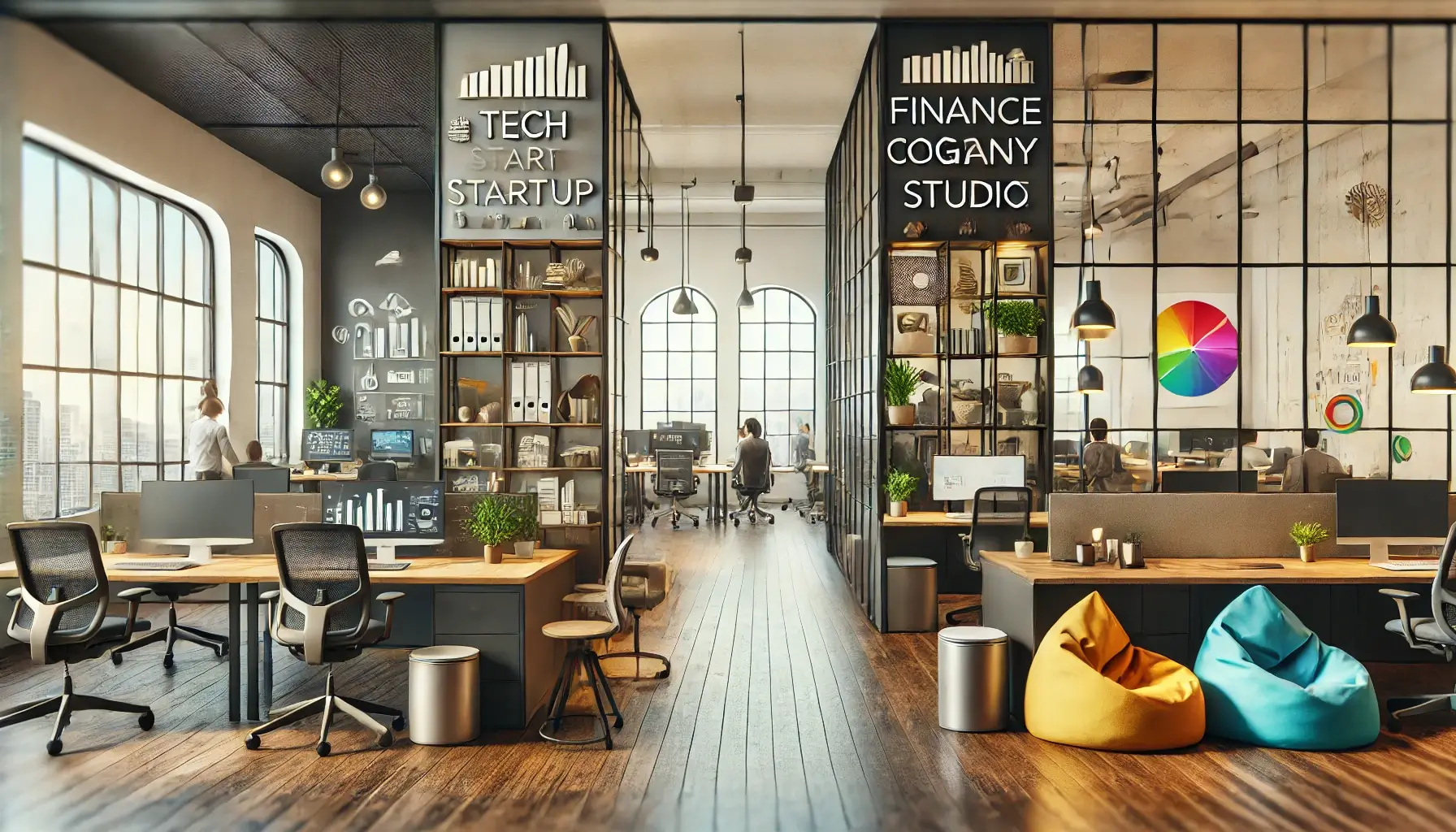
When it comes to office design, a one-size-fits-all approach doesn’t work. Different industries have unique needs, cultures, and workflows that demand tailored design solutions. Whether you’re creating a workspace for a tech startup, a financial institution, or a creative agency, understanding the specific demands of each sector can lead to more effective and inspiring office environments. Let’s explore how office design can be customized for different industries and key elements to consider for each.
1. Tech Companies: Innovation and Flexibility
Tech companies thrive on creativity, collaboration, and rapid innovation. Their offices should reflect these values by being adaptable, modern, and equipped with cutting-edge technology.
Key Design Elements:
- Open Spaces: Emphasize open-plan layouts to encourage spontaneous collaboration and interaction.
- Breakout Areas: Create zones where employees can brainstorm or unwind, such as bean bag-filled lounges or game rooms.
- Tech Integration: Ensure that the workspace supports high-tech equipment and seamless connectivity.
- Flexible Furniture: Use modular furniture that can be rearranged for different team projects and meetings.
Example Solution: Include multi-purpose areas equipped with writable walls and screens for brainstorming sessions, and ensure there are private pods for focused work.
2. Finance Offices: Professionalism and Privacy
Finance offices often deal with sensitive information and require a design that promotes confidentiality and trust. Unlike the dynamic atmosphere of tech companies, financial institutions benefit from a more structured and formal layout.
Key Design Elements:
- Private Offices: Incorporate enclosed offices and meeting rooms to maintain confidentiality and allow for detailed discussions.
- Elegant Aesthetics: Use high-quality materials like marble, wood, and glass to evoke a sense of professionalism and stability.
- Ergonomic Workstations: Provide comfortable, adjustable furniture to ensure long hours at desks are not physically taxing.
- Neutral Colors: Opt for neutral and calming color schemes to create a focused work environment.
Example Solution: Install acoustic panels to reduce noise pollution, ensuring that conversations remain private and employees can concentrate on their work.
3. Creative Agencies: Energy and Expression
Creative agencies demand a vibrant and stimulating environment that fuels innovation. The workspace should inspire and facilitate a fluid exchange of ideas while reflecting the agency’s brand and ethos.
Key Design Elements:
- Bold Colors and Art: Use bright colors and wall art to create an energizing atmosphere.
- Open Collaborative Spaces: Design communal spaces that encourage team meetings and brainstorming.
- Unique Decor: Include bespoke pieces like custom murals or sculptures that align with the agency’s creative work.
- Flexible Layouts: Offer diverse work zones including hot desks, standing desks, and cozy corners for different working styles.
Example Solution: Integrate large communal tables and whiteboards for team ideation, and consider a gallery wall that showcases past projects and ongoing work.
4. Healthcare Offices: Comfort and Reassurance
Healthcare office design needs to prioritize patient and staff well-being. The layout and decor should create a welcoming, stress-free environment.
Key Design Elements:
- Soothing Colors: Use warm, soft tones like pastels or earth colors to promote calmness.
- Natural Light: Ensure that the space benefits from plenty of natural light to boost morale and reduce stress.
- Functional Layouts: Plan spaces for patient interactions and administrative tasks that minimize disruptions and optimize workflow.
- Hygienic Materials: Choose easy-to-clean, durable materials to meet health and safety standards.
Example Solution: Incorporate biophilic design elements, such as plants and nature-inspired patterns, to create a comforting and refreshing atmosphere for both staff and visitors.
5. Law Firms: Prestige and Organization
Law firms need office designs that exude authority and trustworthiness while supporting high levels of organization and privacy.
Key Design Elements:
- Private Meeting Spaces: Include multiple conference rooms and private offices to ensure confidential discussions.
- Traditional Finishes: Use classic materials like dark woods, leather, and polished metal to convey a sense of tradition and reliability.
- Organized Layouts: Ensure that spaces are planned for efficient storage and easy access to legal documents.
- Comfortable Waiting Areas: Design client waiting areas with comfortable seating and tasteful decor to enhance their experience.
Example Solution: Consider bookcases and built-in storage with integrated lighting to create a professional yet inviting atmosphere.
Customizing Your Office Interior: General Tips
- Understand the Company Culture: Whether formal or casual, the culture should influence the design choices.
- Prioritize Functionality: No matter the industry, ensure that the design supports employees’ day-to-day tasks.
- Incorporate Flexibility: As work dynamics evolve, incorporating flexible solutions ensures your office can adapt to future changes.
- Balance Collaboration and Privacy: Provide spaces that cater to both group work and individual focus time.
Conclusion
Tailoring office design to specific industries enhances productivity, fosters the right atmosphere, and meets unique workflow requirements. From the energetic open spaces of tech firms to the refined, private offices of financial institutions, understanding the nuances of each industry allows for a workspace that truly supports its people and objectives. When planning your next office design, let the nature of the work and company culture guide your choices to create an environment that both inspires and functions effectively.
This tailored approach not only elevates aesthetics but also boosts employee morale, productivity, and overall satisfaction. Reach out to our design experts to create a workspace that aligns with your industry needs.