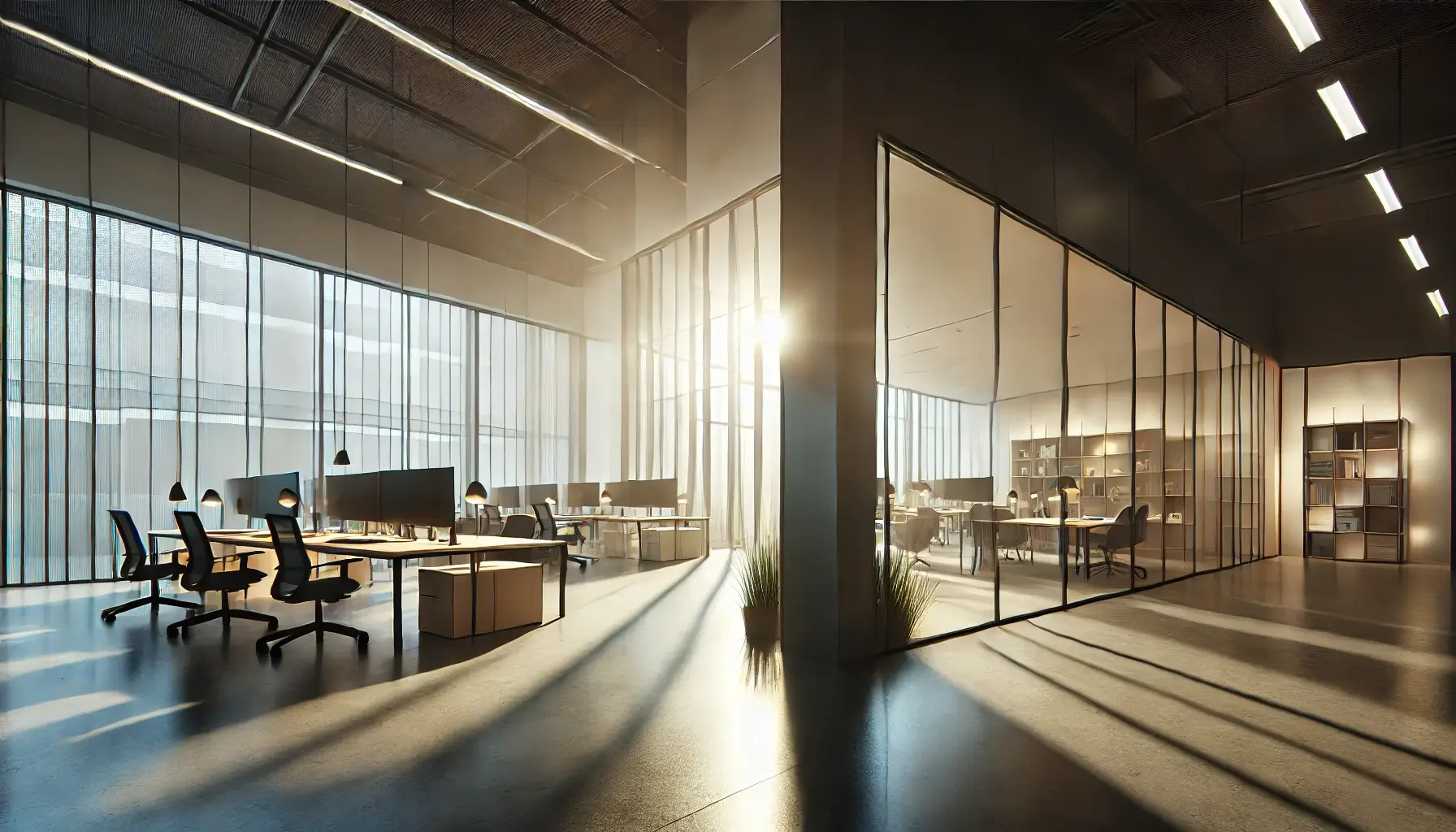
When designing an office space, one of the biggest decisions businesses face is choosing between an open-plan layout or private offices. Each design offers distinct advantages, but the best option depends on your company’s unique culture, goals, and work style. In this blog, we’ll dive into the pros and cons of both open-plan and private office designs, helping you make an informed decision about what’s right for your business.
The Rise of Open-Plan Offices
What is an Open-Plan Office? An open-plan office is a workspace with few or no walls, where employees share a communal area. This design became popular in the early 2000s as companies like Google and Facebook embraced collaborative workspaces that encourage communication and creativity.
Pros of Open-Plan Offices:
- Encourages Collaboration: Open spaces make it easier for employees to communicate and share ideas, fostering teamwork and creativity.
- Cost-Effective: Open-plan offices typically require less construction and fewer materials, which can lower the overall cost of building or renting office space.
- Flexible and Adaptable: These layouts are versatile and can be easily reconfigured as your team grows or as project needs change.
- Increases Transparency: Open spaces give everyone a clearer view of what’s happening, promoting accountability and trust within teams.
Cons of Open-Plan Offices:
- Noise and Distractions: Without walls or barriers, open spaces can become noisy, leading to distractions that reduce productivity.
- Lack of Privacy: Employees may feel a lack of personal space, which can affect their comfort and ability to focus on tasks requiring deep concentration.
- Potential for Conflict: Constant proximity can sometimes lead to friction between colleagues, particularly if there are personality clashes or differences in work habits.
- Reduced Focus on Individual Tasks: For jobs that require high levels of concentration, such as data analysis or writing, open-plan layouts can be counterproductive.
The Value of Private Offices
What is a Private Office? A private office design is where employees work in individual rooms or spaces, typically separated by walls and doors. This traditional office setup offers personal space and privacy, which is still favored by many industries.
Pros of Private Offices:
- Increased Privacy and Focus: Employees can concentrate better on complex tasks in a quiet, isolated environment, without interruptions.
- Personalized Workspaces: Private offices allow individuals to customize their environment to suit their preferences, from lighting to decor.
- Confidentiality: This setup is ideal for roles that require private discussions, such as HR or legal departments, where sensitive conversations need to stay discreet.
- Clear Boundaries: With designated spaces, employees have defined work areas, which can reduce distractions and foster a sense of ownership and responsibility.
Cons of Private Offices:
- Limited Collaboration: Physical barriers between employees can limit spontaneous interactions, potentially reducing team cohesion and creativity.
- Higher Costs: Private offices take up more space and require more construction, making them a more expensive option for businesses.
- Isolation: Employees working in private offices may feel disconnected from their team, which can affect morale and communication.
- Less Flexibility: Private office layouts are more rigid and may be harder to reconfigure without major renovations.
Choosing Based on Company Culture
When deciding between an open-plan layout or private offices, it’s crucial to consider your company’s culture and values.
- Collaborative vs. Individual Work: If your business thrives on collaboration and quick communication, an open-plan office may be ideal. However, if employees need quiet, focused environments to complete their work, private offices might be a better fit.
- Company Size and Growth Plans: Startups and fast-growing businesses often benefit from the flexibility and cost-effectiveness of open-plan offices. In contrast, established companies with a clear organizational structure may prefer private offices for senior staff and focused work teams.
- Nature of Work: Creative industries like advertising or software development often thrive in open-plan spaces, where ideas can flow freely. On the other hand, industries like law, finance, or consultancy, which involve confidential tasks, may benefit more from private offices.
- Employee Well-Being: Consider the mental and emotional needs of your workforce. Open-plan spaces can foster a sense of community, but some employees may find constant interaction draining. Offering a mix of open areas and private rooms can create a balanced environment that caters to different personalities and work styles.
The Hybrid Approach: The Best of Both Worlds?
Many companies are adopting a hybrid office design that combines the best aspects of both open-plan and private office layouts. These hybrid spaces may include open areas for collaborative work alongside quiet zones or private meeting rooms where employees can focus on individual tasks or hold confidential discussions. This approach allows businesses to be more flexible and responsive to the diverse needs of their teams.
Conclusion
There’s no one-size-fits-all solution when it comes to office design. The decision between open-plan and private offices depends on your company’s culture, the nature of the work, and your long-term goals. By carefully weighing the pros and cons of each layout, and perhaps even considering a hybrid approach, you can create a workspace that enhances productivity, fosters collaboration, and reflects your company’s values. Whichever path you choose, remember that the goal is to create an environment where your team can thrive and your business can grow.