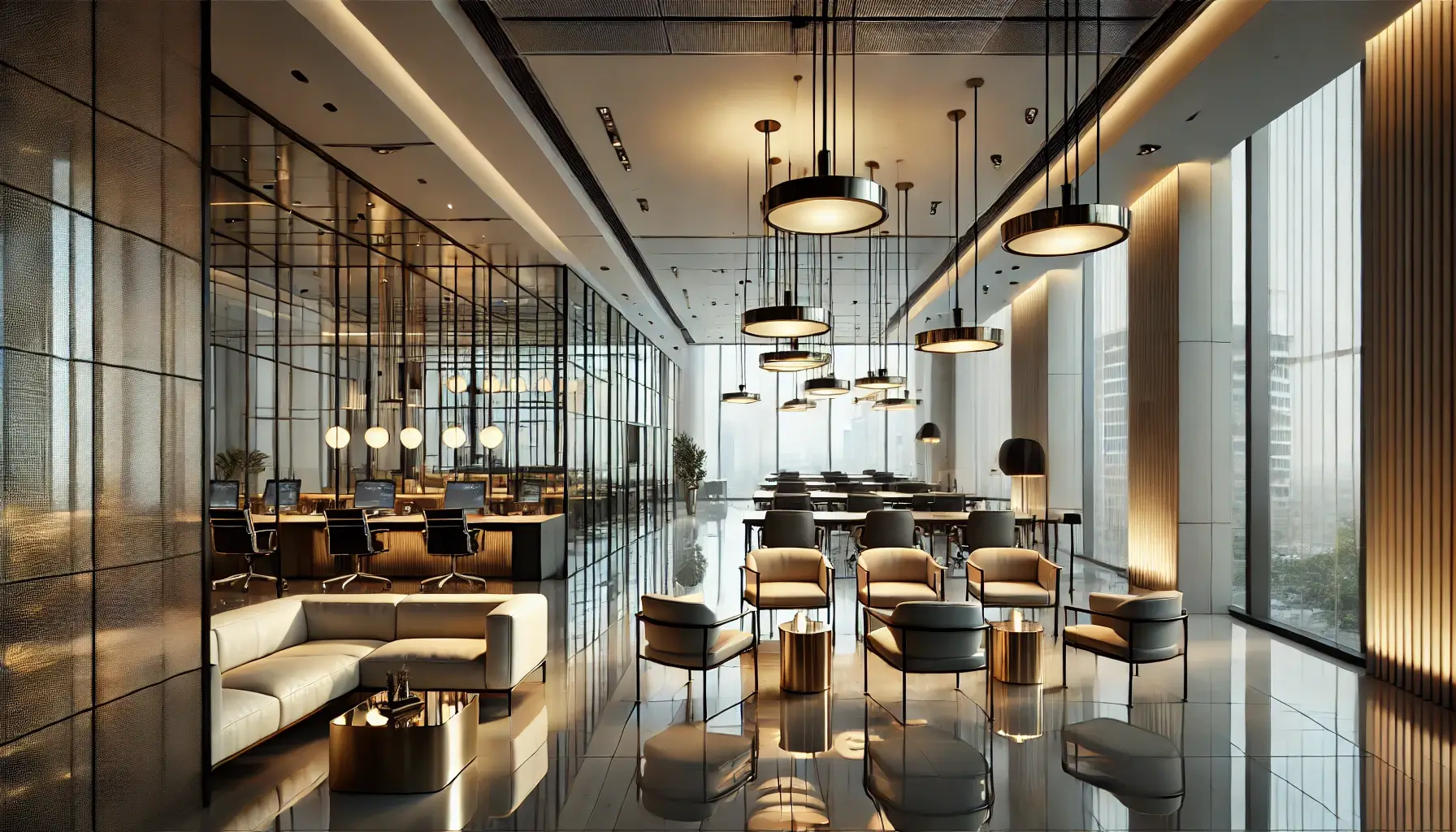
Lighting plays a crucial role in the design and functionality of commercial spaces, impacting not just the aesthetics but also the mood, productivity, and overall well-being of those using the space. Whether it’s an office, retail store, or restaurant, the right lighting can transform an environment, making it more welcoming, efficient, and comfortable. Let’s explore how lighting influences these factors and offer some practical tips on choosing the best lighting solutions for your commercial interiors.
How Lighting Affects Mood and Productivity
1. Mood Enhancement Lighting directly influences the emotional response of people within a space. Warm, soft lighting creates a cozy, relaxed atmosphere, while brighter, cooler lighting energizes and uplifts. For example, a retail store can use focused, bright lighting to highlight products, making them more attractive to shoppers, while softer lighting in waiting areas encourages calm and relaxation.
2. Productivity in the Workplace In commercial office spaces, lighting has a significant impact on employee productivity. Poor lighting, such as flickering bulbs or overly dim spaces, can lead to eye strain, fatigue, and reduced concentration. On the other hand, well-lit workspaces, especially those that mimic natural daylight, can enhance focus, reduce errors, and improve overall performance. Bright, natural-like lighting also helps regulate the body’s circadian rhythm, making employees feel more alert during work hours.
3. Influencing the Perception of Space Lighting affects how people perceive the size and functionality of a room. Dark spaces feel smaller and more confining, whereas well-lit areas seem open and inviting. This principle is especially important in commercial design, where you may want to give the impression of spaciousness or create focal points to guide customers through the space.
Tips for Choosing the Right Lighting Solutions
Choosing the right lighting goes beyond simply picking fixtures. It involves understanding the specific needs of your commercial space and how to align those needs with the right type of lighting. Here are a few key tips:
1. Layer Your Lighting A single source of lighting is rarely enough to meet all the needs of a commercial space. Layering different types of lights—ambient, task, and accent lighting—can help achieve both functionality and design balance. Ambient lighting provides overall illumination, task lighting is focused on areas where work or specific activities are performed, and accent lighting highlights architectural features or focal points.
2. Use Natural Light Where Possible Maximizing natural light in your commercial space is not only energy-efficient but also improves the overall well-being of its occupants. Large windows, skylights, or glass partitions can bring in daylight and reduce the need for artificial lighting during the day. Natural light boosts mood and productivity, making it ideal for office settings.
3. Choose the Right Bulbs Different types of bulbs provide different color temperatures and light qualities. LED lights are a popular choice in commercial spaces because they are energy-efficient, have a long lifespan, and come in various color temperatures. Cool white or daylight bulbs are perfect for offices, while warmer tones might be more suitable for lounges, break rooms, or hospitality spaces.
4. Consider Smart Lighting Incorporating smart lighting systems can help optimize the lighting in your commercial space. These systems allow for easy control over brightness, color temperature, and timing, all of which can be adjusted to suit different times of day or usage scenarios. This is particularly beneficial in offices where lighting can be dimmed during presentations or brightened for collaborative work.
5. Balance Aesthetics and Functionality While the function of lighting is critical, its aesthetic appeal should not be overlooked. Lighting fixtures themselves can serve as design elements that enhance the overall theme of the space. Sleek, minimalist fixtures can complement modern designs, while more ornate lighting can add character to traditional or luxurious interiors.
Conclusion Lighting is a key element of commercial interior design that impacts more than just visibility. It influences how people feel, work, and move through the space. By carefully selecting and layering different lighting types, maximizing natural light, and integrating smart technology, you can create a commercial environment that is both visually appealing and highly functional. Whether you’re designing an office, retail space, or restaurant, thoughtful lighting design can make all the difference in the success of the space.